

REMIX Summit Day 1
Audiences, content trends, culture and more

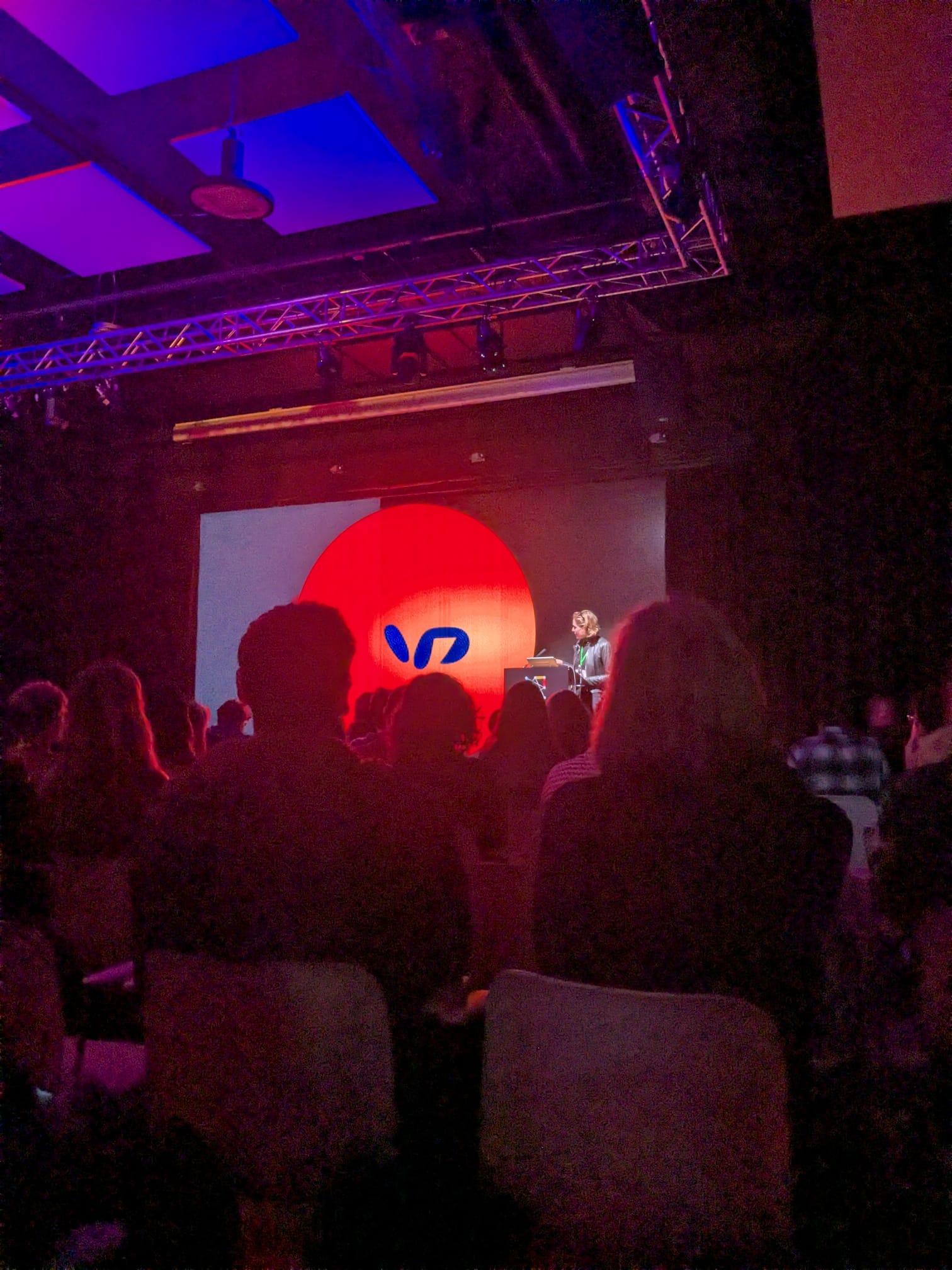
I spent two days last week at the REMIX Summit London, my first time attending and speaking.
At its heart, REMIX is about how cultural organisations stay relevant, resilient and ambitious. The programme spanned everything from digital arts policy and artistic practice to placemaking, audience strategy, and multiple perspectives on AI, including a standout talk from Gus Casely-Hayford on the future of V&A East.
What really stood out for me, though, was how deliberately the conference was designed around connection. Networking wasn’t left to awkward moments at the edges. It was built in, through clear cues to talk to one another, evening events people genuinely wanted to attend, and formats that encouraged conversation rather than competition.
The post-talk “follow the speaker” element played a big role in this, allowing discussions to continue informally after sessions and creating those fortuitous moments of connection that happen between talks.
Even for someone like me who doesn’t naturally relish formal networking, it worked surprisingly well. Conversations felt human rather than transactional, and it was genuinely easy to make connections and swap perspectives.
Rather than trying to summarise everything from Day 1, I wanted to pull out a small number of ideas that felt particularly useful for comms teams in publishing and the wider cultural sector, or that genuinely made me think.
The intimacy economy and social content that actually works
Probably the most immediately transferable session for teams actively running brand social accounts came from We Are Social. They hardly need an introduction, but their presentation stood out because it focused less on formats and more on emotional texture.
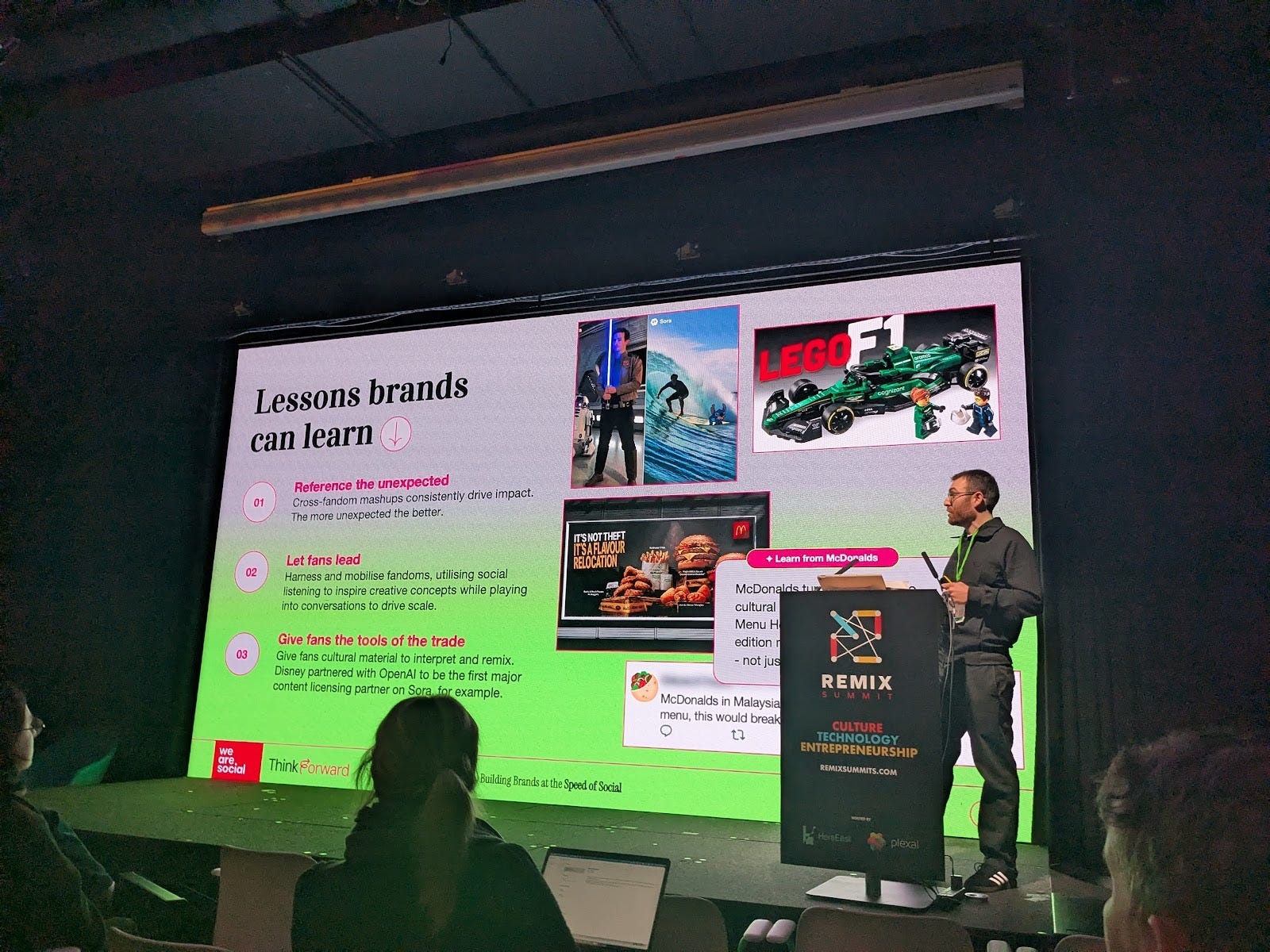
One of the strongest ideas was the concept of the intimacy economy. They referenced formats such as Subway Takes, which succeed through closeness, informality and emotional presence. These are everyday, grounded moments. They are not performative in the traditional brand sense, even though they are clearly staged.
This connects closely to the rise of parasocial relationships, often described as one of the defining dynamics of the moment. Audiences increasingly want content that feels like proximity rather than performance. Not overly polished. Not broadcast. Not big reveal energy. More like overhearing a conversation or catching a moment mid-flow.
For publishing and reading brands, there is a real opportunity here. To create content that is intentional and designed, but does not feel contrived. Conversations that feel casual rather than produced. Not miked-up interviews in an obvious publisher’s office, but encounters that feel informal, human and light. Content that invites the audience to lean in, rather than be impressed.
The distinction between something being staged and something being felt seems increasingly important.
Remixing culture
The second idea that stayed with me was remixing.
In their latest trend report, We Are Social argue that brands need to shift their social presence away from static brand expression and towards cultural vitality. Growth comes from relevance, not repetition. That means participating in culture rather than commenting on it from a safe distance.
This often shows up through what they describe as “maxxing”. Taking a recognisable cultural moment, behaviour or format and leaning fully into it.
Remixing, in this sense, is not about losing brand identity. It is about demonstrating awareness. Showing that a brand understands the mood, the references and the context it exists within.
Interestingly, this is an area where publishing and bookshops are already doing relatively well. I see plenty of confident examples of cultural remixing, leaning into memes, sounds and formats in ways that feel playful rather than desperate. Because books already sit inside wider cultural conversations, there is often less friction here than in other sectors.
That said, there is still hesitation in some quarters. A more traditional or “safe” interpretation of brand values can make teams nervous about borrowing too visibly from popular culture, even when the alignment is strong. The risk is that caution turns into distance, and distance is rarely where relevance lives.
If you are interested in exploring this thinking in more depth, you can read the full report here:
https://wearesocial.com/uk/blog/2026/01/think-forward-2026/
Looking further ahead
The conference opened with a session from an old colleague of mine, now at Co-Star Foresight Lab, sharing research into the future of the creative industries.
The work looked ahead to 2040, mapping possible pathways for a hyper-connected, AI and digital-first economy across the arts and creative industries. They explored four potential futures through the lens of whether we collectively lean into or intentionally pull away from hyper-connectivity, and whether creative production becomes led by artists or controlled by corporations.
It was a sobering way to frame the days that followed. Nothing in the rationale felt entirely unexpected, but there were some thought-provoking details, particularly around user-led content. One scenario imagined storytelling becoming less linear and more adaptive, shaped by mood, age and need, with no single fixed narrative. Another suggested a subsequent cultural reaction against this, with audiences pulling away from that level of personalisation in search of something more fixed and shared.
It felt like a fitting way to open the conference. A reminder that many of the decisions being made now around technology, culture and audiences are not neutral, and that they shape the creative possibilities ahead.
Coming next
I’ll loop back later with insights from Day 2, including how the National Gallery are approaching audience research, how to push back against mediocrity in design using matchboxes and old shopping bags (really), food trends (TV Dinners anyone?) and more.
In the meantime, a few thought-provoking articles I’ve spotted recently ICYMI:
When metrics replace meaning
https://www.thedrum.com/opinion/technoplasmosis-the-hidden-parasite-controlling-modern-marketing
Eugene Healey on post-luxury status

Further watching
If you’re interested in another take on intimacy, this short Reel explores the idea of fleeting intimacy and how it’s being used in advertising through small, passing moments that still feel emotionally present and real. Adverts work best when they make the viewer feel something, but as audiences become more aware of this emotional manipulation on social media, we’re likely to see more subtle approaches like this emerging in the months ahead.
If you were at REMIX and would like to learn more about my work, or if you work in publishing and are interested in the newer audience research approaches I spoke about, you’re very welcome to get in touch. You can reach me at caroline@convertculture.net.
And if you’re a new subscriber, a small note on cadence. I tend to only send something when I feel I genuinely have something useful or interesting to share, rather than for the sake of it. We all get enough emails, and even Substack now seems to be doing its best impression of an inbox.